Can an Air Suction Separator be used for separating different colors of plastic granules? Air Suction Separator
As a supplier of air suction separators, I’ve encountered numerous inquiries regarding the machine’s capabilities, especially when it comes to separating different colors of plastic granules. This topic is not only relevant in the recycling industry but also in manufacturing processes where color – sorted plastic is required. In this blog, I’ll delve into the technical aspects, practical applications, and limitations of using an air suction separator for this specific task.
Technical Principles of Air Suction Separators
Air suction separators operate based on the principle of using air flow to separate materials according to their physical properties such as density, size, and shape. The machine typically consists of an air inlet, a separation chamber, and an outlet for different fractions. When a mixture of materials is introduced into the separator, the air flow lifts and transports the lighter particles, while the heavier ones tend to fall or move at a different rate.
In the case of plastic granules, the density difference is often a key factor. However, different colors of plastic granules of the same polymer type usually have very similar densities. For example, polyethylene granules of different colors may have only minor variations in density due to the addition of small amounts of colorants. This similarity in density poses a challenge for air suction separators when it comes to separating them based on color alone.
Factors Affecting Separation
Density
As mentioned earlier, density is a crucial factor. If the colorants used in the plastic granules have a significant impact on the overall density, then there is a possibility of separation. For instance, some colorants may be denser than others, causing a measurable difference in the density of the colored granules. But in most cases, the density difference introduced by colorants is negligible, making it difficult for the air suction separator to distinguish between different – colored granules based on this property.
Particle Size and Shape
Particle size and shape also play a role. If the plastic granules of different colors have different average sizes or shapes, the air suction separator can potentially separate them. For example, if the manufacturing process results in one color of granules being more spherical and another being more irregular, the airflow will affect them differently. The more spherical granules may be more easily carried by the air, while the irregular ones may be more likely to fall through the air current.
Surface Properties
The surface properties of the plastic granules can influence their interaction with the air flow. Granules with a rougher surface may experience more air resistance, which can affect their movement in the separator. However, since colorants usually do not have a significant impact on the surface roughness of the granules, this factor is not directly related to color – based separation.
Practical Applications and Success Stories
Although separating different colors of plastic granules is challenging, there are still some practical applications where air suction separators can be used in combination with other methods for partial separation.
In some recycling facilities, air suction separators are used as a pre – separation step. The initial separation is based on the density and size differences among the plastic granules. After this step, other color – sorting technologies such as optical sorting can be applied. The air suction separator helps to remove larger contaminants and separate the plastic granules into broad density – based fractions, which makes the subsequent color – sorting process more efficient.
For example, in a recycling plant that processes a mixture of polypropylene (PP) and polyethylene terephthalate (PET) granules of different colors. The air suction separator can first separate the PP and PET based on their density differences. Then, the sorted PP or PET fractions can be further processed by an optical sorter to separate them by color. This combined approach can improve the overall efficiency of the recycling process and reduce the load on the more expensive optical sorting equipment.
Limitations of Air Suction Separators in Color Separation
Despite some potential applications, air suction separators have significant limitations when it comes to directly separating different colors of plastic granules.
The main limitation is the lack of a direct correlation between color and the physical properties that the air suction separator relies on. As mentioned earlier, the density, size, and shape differences due to color are often minimal. This means that the separator cannot effectively distinguish between granules solely based on their color.
Another limitation is the complexity of the plastic mixture. In real – world scenarios, the plastic granules may not only vary in color but also in polymer type, age, and degree of degradation. These factors can further complicate the separation process and make it even more difficult for the air suction separator to achieve accurate color separation.
Looking Forward: Combining Technologies
To effectively separate different colors of plastic granules, it is often necessary to combine air suction separators with other advanced technologies. Optical sorting is one of the most promising technologies for this purpose. Optical sorters use cameras and sensors to detect the color of the plastic granules and then use air jets or mechanical devices to separate them.
By using an air suction separator as a pre – treatment step, the optical sorter can work more efficiently. The air suction separator can remove large foreign objects and separate the plastic granules into more homogeneous density – and size – based fractions. This reduces the complexity of the material stream that the optical sorter needs to process, improving the accuracy and speed of color separation.
In addition to optical sorting, electrostatic separation can also be combined with air suction separation. Electrostatic separators work by charging the plastic granules and then separating them based on their electrostatic properties. Different colors of plastic granules may have slightly different electrostatic properties due to the presence of colorants, which can be exploited for separation.
Conclusion
In conclusion, while an air suction separator alone is not sufficient to separate different colors of plastic granules, it can play an important role in the overall separation process when combined with other technologies. As a supplier of air suction separators, I understand the challenges and opportunities in the plastic recycling and manufacturing industries.
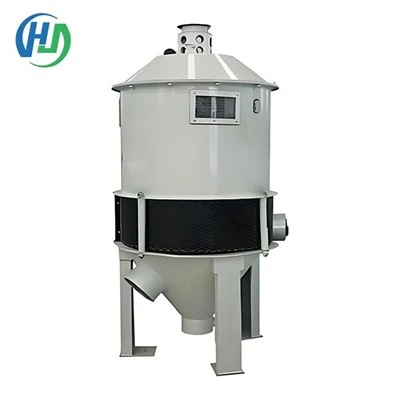
Our air suction separators are designed to provide efficient pre – separation of plastic granules based on density and size. By working with our customers, we can develop customized solutions that combine our separators with other advanced sorting technologies to achieve the best results in color separation.
Grain Drying Tower If you are interested in learning more about our air suction separators or exploring how they can be integrated into your plastic separation process, I encourage you to contact us for a detailed discussion. We are committed to providing high – quality equipment and professional services to meet your specific needs.
References
- "Plastics Recycling Handbook" by Frank J. Karasz
- "Separation Processes in Chemical Engineering" by C. Judson King
- Research papers on plastic sorting technologies from academic journals such as "Waste Management" and "Journal of Environmental Management"
Henan Huinong Machinery Co., Ltd.
Henan Huinong Machinery Co., Ltd. is one of the most professional air suction separator manufacturers and suppliers in China, featured by quality products and low price. Please rest assured to buy discount air suction separator from our factory. We also accept customized orders.
Address: No. 6, Northeast Corner of the Intersection of Renmin Road and Zhujiang Road, New District, Huaxian County, Henan Province
E-mail: frank.tang@huinongmachinery.com
WebSite: https://www.huinongmachinery.com/
