If you’ve ever walked past a steel mill or a foundry, you might have seen those heavy, pipe-like parts sticking out of the furnaces, feeding air and oxygen into the molten metal. Those are tuyeres, and if you’re a mill operator, you know their performance can make or break your production schedule and bottom line. As someone who’s been supplying tuyeres for over a decade, I’ve seen firsthand how choosing the right ones isn’t just about matching dimensions—it’s about evaluating them against specific, data-driven indicators that tell you whether a product will hold up under extreme heat, pressure, and constant use. Let’s break down what actually matters when you’re vetting tuyere products. Tuyere
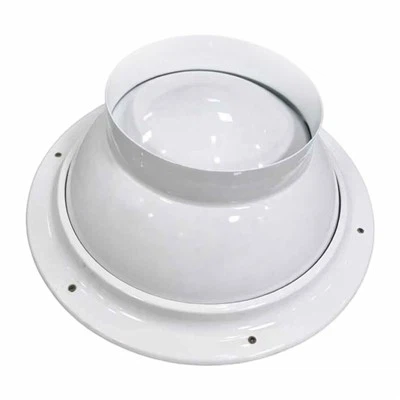
First and foremost is thermal performance. Tuyeres sit right at the interface of super-hot molten metal (which can reach 1,500°C and higher) and the forced air or oxygen you pump into the furnace, so their ability to manage heat is non-negotiable. I’ve seen cheap tuyeres fail within weeks because they can’t dissipate heat fast enough, leading to overheating and cracks that cause leaks. The key here is two-fold: heat transfer efficiency and thermal conductivity. High-quality tuyeres use materials with high thermal conductivity—copper is the gold standard for this, because it moves heat away from the inner lining quickly, preventing it from melting or warping. For context, our copper tuyeres have a thermal conductivity of around 401 W/m·K, which is way higher than most steel alternatives, and that translates to longer service life.
Another part of thermal performance is cooling system integration. Tuyeres rely on water or air cooling to stay at a safe operating temperature, so how well their design works with your furnace’s cooling loop is critical. A tuyere with uneven cooling channels will develop hot spots, even if the base material is good. For example, if the inner chamber (the part facing the furnace) cools slower than the outer shell, thermal stress builds up over time, leading to fatigue cracks. We test every tuyere we supply with flow simulation software to ensure uniform water velocity across all cooling channels—no dead spots where water pools or moves too slowly, which would cause localized overheating. That’s a detail that a lot of cut-rate suppliers skip, and their customers end up paying for it with frequent replacements.
Next up is structural integrity under operating load. Tuyeres don’t just face heat—they also have to withstand constant pressure from the air/oxygen being blown into the furnace, as well as mechanical stress from the furnace’s expansion and contraction during start-ups and shut-downs, and occasional impacts from slag or metal splashes. The main indicators here are tensile strength and pressure resistance. Tensile strength measures how much force a material can take before it deforms or breaks; for copper tuyeres, we work with a minimum tensile strength of 200 MPa, which is enough to handle the 2–5 bar pressure common in most blast furnaces. For specialized applications, like larger smelters with higher blast pressure, we use alloyed copper that pushes that tensile strength up to 250 MPa, so the tuyere doesn’t bulge or crack under load.
I’ve had a customer come to me once after buying a tuyere from a supplier who used pure copper without any alloying. Within a month, the tuyere had deformed so badly from pressure that it was leaking air into the furnace, throwing off the combustion balance and costing them thousands in lost production. That’s why hardness and wear resistance are part of structural integrity too. The inner tip of the tuyere, where slag and metal come into direct contact, is especially prone to abrasion. Our process involves a surface treatment that adds a thin layer of chrome or nickel to the tip, boosting its hardness from around 100 HV for pure copper to 500 HV, which resists scratches and wear. That small adjustment adds months to the tuyere’s life.
Then there’s corrosion and slag resistance. Furnaces produce all kinds of harsh byproducts: sulfur, phosphorus, and other corrosive elements in the gas and slag that can eat away at a tuyere over time. Corrosion is a silent killer—you might not notice it until the tuyere is almost perforated, leading to catastrophic failures mid-shift. The indicator here is corrosion rate, measured in millimeters per year under your specific furnace conditions. We test each tuyere we make in a lab environment that mimics our customer’s actual gas composition, so we can predict how fast it will corrode. For example, if a mill works with high-sulfur ore, we add a corrosion-resistant coating that reduces the corrosion rate from 0.2 mm/year (uncoated) to less than 0.05 mm/year. That means the tuyere won’t need replacing for another 2–3 years, instead of every 6 months.
Slag resistance is a separate but related factor. Slag is the molten byproduct that floats on top of the metal, and it can stick to the tuyere’s inner surface, blocking the air flow and reducing efficiency. A tuyere with a surface that repels slag (called “non-wetting”) will keep its inner channel clear, so the air/oxygen flows evenly. We use a smooth, polished inner lining and sometimes a ceramic coating that prevents slag from adhering. I had another customer who was dealing with constant clogging—their old tuyeres would get slag buildup within a week, forcing them to shut down the furnace to clean them. Switching to our slag-resistant tuyeres cut their clogging incidents by 90%, and they saved over $100,000 a year in downtime costs.
Dimension accuracy and fit are another set of indicators that people overlook, but they’re crucial for installation and performance. A tuyere that’s even a millimeter too long or too wide won’t seal properly in the furnace’s tuyere nose, leading to air leaks. Leaks mean you’re wasting energy—air that should be going into the furnace is escaping, so you have to pump more air to get the required volume, which increases fuel costs. For dimension accuracy, we hold tolerances of ±0.2 mm for all critical measurements: outer diameter, inner channel size, and length. We do a full 3D inspection on every batch of tuyeres we ship, so our customers never have to deal with a part that doesn’t fit. I’ve heard horror stories of mills waiting days for a replacement tuyere because the wrong size was sent, and that’s not something any production team can afford—time is money in the steel business.
Finally, there’s service life predictability. At the end of the day, a tuyere is an expendable part, but you want to know how long it will last so you can plan replacements without unexpected shutdowns. The best suppliers will provide a projected service life based on your specific operating conditions, not a generic number. For example, a tuyere for a blast furnace running at 1,550°C with low-sulfur ore might last 18–24 months, while one for a smaller foundry at 1,400°C might last 12–16 months. We work with each customer to adjust the design and material based on their unique setup, so their service life is as long as possible. We also offer post-installation support—we can check tuyere performance during scheduled shutdowns and give you advice on extending their life, like adjusting cooling flow or monitoring gas composition.

I’ve been in this industry long enough to know that when it comes to tuyeres, you get what you pay for. Cheap, low-quality tuyeres might seem like a good deal upfront, but their frequent failures, downtime, and hidden energy costs end up costing you way more in the long run. The indicators I’ve outlined aren’t just technical specs—they’re the difference between a smooth production run and a crisis that costs you thousands. If you’re looking for tuyeres that are built to perform in your specific furnace, we can walk you through our testing process, share case studies from similar operations, and help you find the right product for your needs. Reach out to our team to discuss your requirements and get a personalized evaluation of the tuyeres that will work best for you.
Valve References:
- Evans, A.G., & Hutchinson, J.W. (1984). Thermal stress and fatigue in engineering materials. Journal of the Mechanics and Physics of Solids, 32(3), 169–195.
- Zhang, L., & Wang, H. (2018). Heat transfer and structural performance of copper tuyeres in blast furnaces. Ironmaking & Steelmaking, 45(7), 621–628.
- ISO 9001:2015. (2015). Quality management systems — Requirements. International Organization for Standardization.
- Korchynsky, M. (2003). Slag behavior and corrosion in ferrous foundry furnaces. AFS Transactions, 111, 789–802.
- Nouri, J.M. (2012). Heat transfer in high-temperature industrial components. International Journal of Heat and Mass Transfer, 55(15–16), 4231–4245.
Jiangsu Hengyu Fire Protection Technology Co., Ltd.
We’re well-known as one of the most experienced tuyere manufacturers in China, also support customized service. With abundant experience, we warmly welcome you to buy bulk discount tuyere from our factory. If you have any enquiry about quotation, please feel free to email us.
Address: Jiangsu Hengyu Fire Protection Technology Co., Ltd., No. 56, Xinyi Road, Chengbei Industrial Park, Jingjiang City, Jiangsu Province
E-mail: Jskyxfkj@163.com
WebSite: https://www.cehengyu.com/
