If you’ve worked in industrial communications, public safety, or infrastructure operations long enough, you’ve probably heard the same question a hundred times: when is it right to stick with what’s familiar (like analog radio) and when is it time to make the switch to 4G? As someone who’s spent 18 years supplying both analog radio and 4G systems to utility companies, municipal fire departments, and manufacturing plants across the Midwest, I get the tug of both sides. Last month, I sat in on a call with a small-town water department that was replacing its aging fleet of analog handheld radios and was split between the old system they’d relied on for decades and a 4G setup a neighboring town had recommended. The crux of their debate wasn’t just about cost—it was about compatibility. Could 4G actually work with the other tools and networks they already had, or would swapping to it leave them stranded when a pipe burst and they needed to coordinate with the state’s emergency management team? That conversation got me thinking: how does 4G’s compatibility stack up next to analog radio, and what do our customers actually need to know before they make that call? 4g and Analog Radio
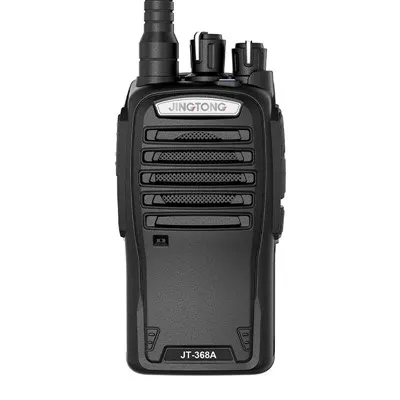
Let’s start with analog radio, because it’s the foundation most industrial and public safety teams build their existing workflows around. Analog radio works by translating audio signals into continuous, varying radio waves that travel over specific frequencies. For generations, its biggest selling point was simplicity—no need for an external cellular data plan, no reliance on a third-party network, just a radio that could transmit and receive within a set range. But when it comes to compatibility, analog radio’s flexibility is narrow. It’s built to talk to other analog radios on the same frequency; that’s it. If a fire department uses a UHF analog radio and needs to coordinate with a highway patrol team on VHF, they’re stuck without a cross-channel bridge unless they invest in a separate, bulky repeater that can translate between the two bands. Even when teams do upgrade repeaters, they often run into interference from other nearby analog signals, which creates dead zones in tunnels, wooded areas, or sprawling industrial facilities—places that are common in our customer base. Another limitation: analog radio doesn’t play nice with modern tools. If a warehouse wants to pair their radios with a real-time location tracking system or a cloud-based incident reporting tool, analog can’t do that natively. You have to piece together clunky workarounds, like having someone write down locations and call them in, which slows response times down when every minute counts. That’s not a flaw as old as analog itself—it’s a limitation built into how the technology was designed, for an era when comms were just about voice, not integrated data.
Now, let’s talk about 4G, specifically the kind of LTE-M or CBRS 4G we supply for industrial use, which is different from consumer 4G in that it’s built for low-power, reliable, mission-critical communications. 4G compatibility is a totally different beast, and it starts with how it connects. Most of our 4G systems can integrate with almost any existing network or tool a customer already uses—whether that’s a cloud-based asset management platform, a SCADA system for manufacturing lines, or even satellite links for remote sites that don’t have cellular coverage. The key here is IP (Internet Protocol) connectivity, which 4G runs on. IP is the universal language of digital communication; almost every modern tool, software, and network is built to speak IP, so integrating 4G with existing infrastructure is as simple as setting up a bridge or a standard API, no custom, expensive hardware required. For example, a paper mill we work with was using analog radios to coordinate its three production shifts, but they also needed to track forklift and machine locations in real time. They tried adding a separate GPS tracking system that didn’t talk to their radios, leading to missed coordinates and delayed response when a machine broke down. When we switched them to a 4G push-to-talk (PTT) system, they were able to integrate their existing telemetry and location tools directly into the same network, so their operators could see both a teammate’s location and hear their voice in the same dashboard. That’s the kind of cross-compatibility analog radio can’t deliver.
But here’s the part we always warn our customers about: 4G’s compatibility isn’t one-size-fits-all, and it’s not as simple as just swapping out radios. The biggest compatibility gap for 4G is coverage, especially in remote areas where analog radio still thrives. If a power company has line crews working 20 miles outside a small town with no cellular service, a 4G-only radio won’t work, because it relies on cell towers. That’s where we’ve had success pairing our 4G systems with analog radios as a hybrid solution, which is a middle ground many customers overlook. For example, a state park police department we supply had a mix of 100 officers, 60 of whom worked on the main park roads with solid cellular coverage, and 40 who patrolled backcountry trails with no cell service. Instead of making them all use one or the other, we set up a hybrid system: officers on trails use their existing analog radios for local communication, and officers on the main roads use 4G PTT. The system uses a central gateway that lets them talk to each other, even when some are on analog and some on 4G, so a park ranger on a trail can radio an officer in the main parking lot without needing a separate frequency. That’s a compatibility win that works for teams that don’t want to fully abandon their analog investments yet.
Another area where 4G’s compatibility outshines analog is with multi-stakeholder communication, which is non-negotiable for public safety and utility companies. When a small town has a water main break, they need to coordinate with their own crew, the state’s environmental agency, the local fire department, and a private construction company that handles pipe repairs. With analog radio, each of these groups is probably on a different frequency, so setting up an all-hands call requires coordinating a repeater, a temporary frequency, and hoping no other nearby group is using that same band. With 4G, all these groups can join the same digital PTT channel, regardless of their radio type—so long as their radios can connect to the 4G network. We recently supplied a municipal public safety team that used this exact setup during a tornado outbreak: their police, fire, and EMS teams all used 4G PTT, and the county emergency management office, which used a mix of analog and satellite radios, joined the same channel without any extra hardware or scheduling. That level of cross-compatibility isn’t just convenient—it’s lifesaving, because it cuts down on miscommunication when every second matters.
But let’s be honest: analog radio still has a compatibility edge for one specific use case: when you need a simple, standalone system with no external dependencies. If a small manufacturing plant only has 10 employees on the floor and no plans to integrate with data tools, the cost of switching to 4G might not be worth the extra features. Analog radio works reliably for those small teams, and it doesn’t require a data plan, regular software updates, or cell towers to operate. That’s why we never push customers to abandon analog outright; we work with them to match the technology to their specific compatibility needs. For example, a local bakery with 25 delivery drivers and a back-of-house team only needed analog radios to coordinate orders and deliveries, so we supplied a compact analog repeater that covered their entire facility. A neighboring food processing plant, though, needed to track their 50 production workers’ locations and share real-time temperature data from ovens, so we installed a hybrid 4G-analog system that worked with their existing analog handhelds while adding the data integration they needed.
One common misconception we run into is that 4G is incompatible with mission-critical use cases because it relies on cellular networks, which can have outages. That’s not true for the industrial-grade 4G systems we supply, which have built-in fallback options. If the main cellular signal drops, the system can switch to a private CBRS 4G network (which we also install) or even pair with analog radios as a backup, so communications never go dark. That level of failover compatibility is something analog radio can offer too, but only if you have separate backup repeaters or extra radios on hand. With 4G, the fallback is integrated into the system, so you don’t have to stock extra hardware just for emergencies.
Another point of comparison is scalability, which ties directly to compatibility. If a customer’s team grows, analog radio requires adding new frequencies, repeaters, or even new radio models, all of which have to be compatible with the existing system. That can get expensive quickly—for a team adding 50 new radios, you might have to adjust your entire frequency plan to avoid interference. With 4G, adding new radios is as simple as activating a new SIM card or pairing it with the existing gateway. We had a utility customer that grew from 20 line crews to 70 in three years; when they first had analog, adding 50 new radios required three new repeaters and a full frequency reconfiguration that took six weeks. With their 4G system, adding 50 new radios took two hours, and they could integrate the new crews’ data tracking tools into their existing dashboard without any extra infrastructure. That scalability makes 4G far more compatible with growing businesses or teams that need to adapt quickly to changing needs.
But we also see customers struggle with 4G compatibility when they have legacy analog tools they can’t afford to replace right away. For example, a public school district we worked with had 200 analog radios they’d invested $50,000 in over 10 years, and they couldn’t justify replacing them for a new 4G system. We worked with their IT team to set up a bridge that let their existing analog radios connect to a 4G network, so they could start using real-time location tracking and digital incident reporting without tossing out their old investment. That’s the kind of practical compatibility we focus on as a supplier—we don’t sell one-size-fits-all solutions, we work with what our customers already have to meet their needs.
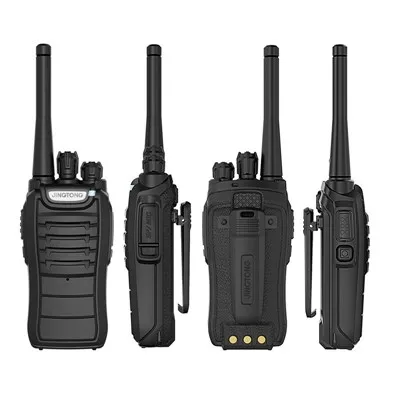
At the end of the day, the compatibility of 4G vs. analog radio boils down to what a team actually needs their communications system to do. If you just need reliable, simple voice communication for a small, closed group with no need for data integration or cross-team coordination, analog radio is still a solid, compatible choice. But if you need to integrate with modern tools, coordinate with multiple external stakeholders, scale your team easily, or track assets in real time, 4G’s IP-based compatibility is hard to beat. The sweet spot for most of our customers is the hybrid approach: using analog for remote or standalone needs, and 4G for connected, scalable operations, with a central gateway that lets them talk to each other no matter which technology they’re using.
android Poc Radio If you’re evaluating your current communications setup and wondering whether your existing tools are compatible with a switch to 4G, or if you need to build a hybrid system that works with both analog and digital, we’re here to help. Our team has worked with hundreds of teams across industries to assess their compatibility needs, design custom systems that fit their budget, and provide ongoing support to make sure their comms never hold them back. Reach out to start a conversation about your specific use case—we don’t push unnecessary upgrades, we provide solutions that work for you.
References
- Federal Communications Commission. (2022). CBRS and Private LTE for Industrial and Public Safety Communications. FCC Office of Engineering and Technology.
- International Association of Fire Chiefs. (2021). Mission-Critical Communications: Hybrid Analog-Digital Systems for Rural and Urban Departments. IAFC Technical Report.
- GSMA. (2020). LTE-M and NB-IoT for Industrial IoT: Compatibility with Legacy Infrastructure. GSMA Industrial IoT Program.
- National Association of Water Companies. (2023). Communications Solutions for Water Utilities: Balancing Analog Reliability and 4G Scalability. NACO Infrastructure Report.
Jingtong (Quanzhou) Electronics Co., Ltd.
We are one of the most professional 4g and analog radio manufacturers and suppliers in China, specialized in providing high quality customized service. We warmly welcome you to buy durable 4g and analog radio made in China here from our factory. For price consultation, contact us.
Address: No.288, Si Huang Industry Zone, Xia Mei Town, Nan An, Quanzhou, Fujian province, China 362302
E-mail: jtdjj@jtdjj.com
WebSite: https://www.jteradio.com/
