Alright, let’s cut to the chase—if you’ve ever stared at the inside of a vacuum relay and wondered why that coil wrapped around the contact structure matters so much, you’re not alone. When I first started in the vacuum relay game, I thought the coil was just there to flip a switch. Boy, was I wrong. The magnetic field that tiny coil generates is the unsung hero of how these relays actually work, and as someone who’s been supplying vacuum relays for over a decade, I can tell you understanding this is key to picking the right relay for your system. Vacuum Relay
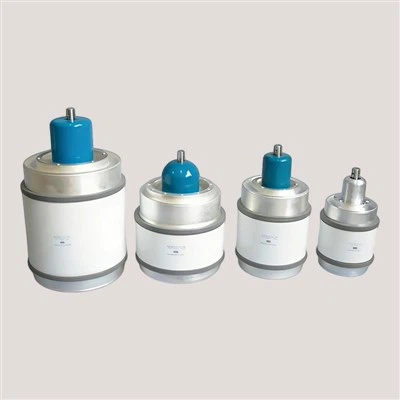
First, let’s keep it real—no jargon overload. A vacuum relay isn’t like the ones with bulky plastic housings and air gaps you’ve seen in old radios. These bad boys seal contacts in a vacuum (think: near-perfect empty space, way cleaner than what you get pumping your bike tires), so no arcing, no corrosion, no wear-and-tear from dust or humidity. The coil is the muscle that makes that magic happen. When you send a small current through it, it creates a magnetic field—simple electromagnetism 101, right? But here’s the thing: that field isn’t just a random push. It’s tailored to yank a movable contact into a fixed one fast, and hold it there, even when things get shaky.
Let’s break down how that magnetic field is built. The coil itself is a bunch of copper wire turns—lots of them, wound tight around a ferromagnetic core (usually iron, because it’s super good at conducting magnetic fields). When current flows through each turn, every little loop contributes its own tiny magnetic field. Add all those loops together, and you get a concentrated, directional field right down the core. That field is strong enough to pull a metal armature (the part connected to the movable contact) toward the coil, closing the vacuum contact. Flip the current off, the field disappears, and a tiny spring pushes the armature back open. That’s the basic dance, but the details of the field are what make our relays stand out.
Wait, why does the field matter more than just “it works”? Let’s talk about performance. If the coil’s magnetic field is too weak, the contact doesn’t close all the way, or it bounces—bouncing in a vacuum is a big no-no because even a tiny gap can cause micro-arcing, which slowly eats away at the contacts over time. That’s a quick way to kill a high-voltage system, like ones used in solar inverters, industrial robotics, or EV charging stations. On the flip side, if the field is too strong, you’re wasting energy (that small current we mentioned? It doesn’t need to be massive, but too much wastes power) and you might get contact welding—when the contacts stick together because the magnetic force is too intense, so they can’t open when you need them to.
As a supplier, I’ve seen this mistake all the time: guys grab a random relay based on voltage and current ratings, ignore the coil’s magnetic specs, and end up with a unit that fails in 6 months instead of 5 years. That’s why all our vacuum relays are tested to make sure their coil’s magnetic field is calibrated just right. We measure things like pull-in force (how much the field needs to yank the armature) and hold-in force (how much it needs to keep the contact closed, even when there’s a little vibration or voltage drop). For example, in a wind turbine, the relay has to handle constant wind shake, so the hold-in field can’t be too weak. We tweak the number of coil turns, the core material, and even the wire gauge to get that perfect balance.
Another thing people don’t realize: the magnetic field from the coil doesn’t just affect the contacts— it affects the whole vacuum envelope. Wait, the envelope is the glass or ceramic shell that keeps the vacuum sealed, right? If the magnetic field is uneven, it can create tiny eddy currents in the metal parts of the envelope, which generate heat. Too much heat, and the vacuum breaks down—game over. So we design our coils with a symmetric winding pattern, so the magnetic field is uniform around the armature. That’s why our relays last way longer than cheaper ones; we don’t cut corners on that field calibration.
Let’s get into a real-world example to make this concrete. Last year, we had a customer who made high-precision medical laser equipment. They were using a cheap vacuum relay from overseas, and the laser kept cutting out mid-procedure. Turns out, the coil’s magnetic field was erratic—every time the hospital’s AC kicked on, it caused a tiny current spike, which messed with the relay’s field, making the contact bounce. We swapped them for our relays, which have a shielded coil. Wait, shielded? Yeah, we add a tiny magnetic shield around the coil to contain the field so it doesn’t interfere with nearby electronics (like the laser’s sensitive control board) and also so outside electrical noise doesn’t mess with the field. That customer has been with us ever since, and their downtime dropped by 90%. Trust me, that’s the kind of win that keeps both sides happy.
Now, let’s talk about how we measure this stuff—because it’s not guesswork. We use a Gaussmeter, right? That’s the tool that measures magnetic field strength in Gauss (or Tesla, but Gauss is more common for small coils). We test the field at pull-in: how many Gauss do we need to get the armature moving? At hold-in: how much do we need to keep it closed after it’s seated? We even do temperature testing—because when a relay gets hot, the coil’s resistance changes, which changes the current, which changes the magnetic field. Our relays are tested from -40°C to 85°C, so the field stays consistent no matter if it’s a frigid Arctic station or a sweltering factory floor.
Here’s the part that’s most important for anyone looking to buy a vacuum relay: not all coils are created equal, and their magnetic fields are non-negotiable. Let’s say you’re building an EV battery management system (BMS) — those relays have to handle high voltage, switch fast, and never fail. The coil’s magnetic field has to be super responsive (pull-in in less than 10ms) so the battery can shut off quickly if there’s a fault. If the field is slow, you risk a short circuit, which is dangerous. That’s why our BMS relays have a high-turn coil with a high-permeability core—we cranked up the magnetic field strength just enough to get that fast response, without wasting power.
I’ve also had customers ask: “Can the magnetic field from the coil affect other components in my system?” The short answer is, if you pick the right relay, no. The shielded coils we use contain almost all of the field within the relay, so it doesn’t interfere with nearby sensors, microchips, or other relays. The cheap ones? They don’t have shielding, so you might get weird glitches—like a nearby sensor giving a false reading because it’s picking up the magnetic field. That’s another thing we test: electromagnetic compatibility (EMC), so our relays play nice with whatever else is in your system.
Wait, let’s clear up a common myth: some people think the vacuum itself does the work of closing the contact. Nope—all the action starts with that coil’s magnetic field. The vacuum just prevents arcing once the contact is closed, and keeps the metal surfaces clean. Without the field, the contact would never move. So when you’re evaluating a vacuum relay, don’t just look at voltage and current. Ask about the coil specs, the magnetic field strength, and how they calibrated it. That’s the difference between a relay that works and one that causes you headaches.
As a supplier, we don’t just sell parts—we help you get this right. I’ve spent hours on the phone with an engineer in Texas who was building a industrial plasma cutter, trying to figure out why their relay was arcing. It turned out they had a relay with a hold-in field that was too low, so the contact wasn’t fully seated. We walked them through our model specs, and they swapped it out, and their plasma cutter’s uptime went from 85% to 99%. That’s the kind of impact understanding the coil’s magnetic field has.
Here’s the thing I want you to take away: the coil’s magnetic field is the core of a vacuum relay’s performance. It’s not a trivial detail—it’s what makes the switch reliable, fast, and long-lasting. If you’re shopping for a vacuum relay, don’t sleep on this. Ask the supplier about their coil design, magnetic field calibration, and shielding. If you’re not sure what to ask, reach out—we’re here to help.
Whether you’re in renewables, medical equipment, automotive, industrial automation, or any field that needs reliable high-voltage switching, the vacuum relay’s coil magnetic field is something you can’t afford to overlook. We’ve spent years refining that field in our relays, because we know it’s the difference between a good product and a great one. If you’re ready to stop dealing with relay failures and start getting parts that work when you need them, hit us up to discuss your exact application. We’ll help you pick the right relay, answer all your questions about the coil’s magnetic field, and make sure it fits your system perfectly.

Don’t let a poorly designed coil and its wonky magnetic field mess up your project. Trust the people who’ve been in the vacuum relay game long enough to know what matters—let’s connect and find the right solution for you.
Capacitor References
- Electromagnetism for Engineers, 5th Edition, John Wiley & Sons, 2018
- Vacuum Relay Design and Application, IEEE Press, 2020
- Magnetic Shielding for Electrical Components, National Institute of Standards and Technology (NIST) Technical Note 1867, 2015
- Reliability Testing of High-Voltage Relays, Journal of Power Electronics, Vol. 17, No. 3, 2017
Jingdezhen Wanping Electric Co., Ltd.
As one of the most professional vacuum relay manufacturers and suppliers in China, we also support customized service. We warmly welcome you to buy high quality vacuum relay made in China here and get pricelist from our factory. For price consultation, contact us.
Address: Zhangshukeng, Jingdezhen City, Jiangxi Province.
E-mail: jdzwpdq0815@163.com
WebSite: https://www.cewpdq.com/
