If you’ve ever stood on the floor of a busy sheet metal fabrication shop—listening to the low thrum of a hydraulic press brake, the high-pitched whine of a CNC laser cutter, the sharp clink of a shear blade through ¼-inch steel—you’ve probably wondered how all that heavy, precise machinery runs. As a sheet metal fabrication machinery supplier who’s spent 17 years on the floor of our clients’ shops, troubleshooting outages and upgrading underpowered setups, I can tell you this: power requirements aren’t just a numbers game. They’re the backbone of every job you turn out, from a simple HVAC duct flange to a custom aerospace bracket. Skip getting them right, and you’ll face delayed deliveries, ruined parts, and costly breakdowns. Get them right, and your machines will run longer, last longer, and make you more money. Let’s break down what you need to know, grounded in real shop experiences I’ve lived, not just textbook specs. Sheet Metal Fabrication Machinery

First, let’s start with the basics that most new fabricators gloss over: machine type dictates power need, full stop. Not all sheet metal tools pull the same juice, and pairing the wrong power source to your machine is one of the most common mistakes I see first-time buyers make. Take the three workhorses of any shop: laser cutters, press brakes, and mechanical shears. Let’s use real, recent client examples to make this concrete. Two years ago, we sold a 4 kW fiber laser cutter to a small job shop in Cleveland. They pulled their electrical permit and used a 208V single-phase 100-amp line, which was what their old 1 kW CO2 laser ran on. Within three weeks, the laser’s internal cooling system kept tripping the breaker during mid-run cuts, and the machine’s CNC controller started glitching because of inconsistent voltage. We sent a service tech out, and he measured line voltage that dropped 18% during peak use—way below the 5% maximum deviation specified for industrial machinery. The problem? Fiber lasers, which are now the standard over outdated CO2 models, run on three-phase power, not single-phase. The 4 kW unit needed a 480V three-phase 200-amp circuit with a dedicated 50 kVA transformer, plus a 5% line voltage regulation to avoid stalling the cutting head. That Cleveland shop ended up spending $12,000 upgrading their electrical panel, but a year later, they reported their laser’s uptick rate hit 98%—vs. 82% on their old CO2 machine—because we got the power right the second time around.
Press brakes are another area where I see power misalignment, often because fabricators confuse their tonnage rating with power draw. A 100-ton hydraulic press brake isn’t just a 100-amp machine—its power needs depend on two things: its stroke speed and whether it has advanced features like crowning or CNC backgauges. Last year, a farm equipment parts shop in Iowa ordered a 160-ton press brake from a competitor that quoted a 208V single-phase power requirement to beat our quote. Their existing panel only had single-phase service, so they jumped on it. Within two months, the machine’s hydraulic pump overheated during 10-hour production runs bending ⅜-inch steel, and the CNC backgauge would lag mid-cycle. We got the call to fix it, and our tech found the competitor had underrated the machine’s power draw by 30%—they’d listed the “standby” power instead of the peak power needed for continuous, high-tonnage bending. The correct spec for a 160-ton hydraulic press brake with CNC backgauges is 480V three-phase 150-amp service, with a variable frequency drive (VFD) to adjust power based on load. Adding a VFD not only cuts power use by 20% during light runs but also prevents overheating by matching power output to demand. That Iowa shop ended up replacing that underpowered press with our 160-ton model, with the correct three-phase setup, and told us their bending cycle time dropped 12% because the power was consistent.
Mechanical shears, for all their seeming simplicity, have a power quirk too: their peak power draw happens when the blade first cuts through the thickest gauge of metal, not just when it’s running. A ¼-inch thick mechanical shear rated for 10-foot cuts doesn’t need the same power as a laser, but it does require a dedicated circuit. I once helped a local HVAC shop move into a new facility and connected their new shear to a shared circuit with their drill press and band saw. When they cut 10-foot 16-gauge aluminum, the voltage dropped so much that the shear blade only cut halfway through the metal, leaving them to grind off the leftover strip—wasting two hours of labor and ruining a $50 sheet of material. Ditching the shared circuit, they installed a dedicated 480V three-phase 60-amp line, and those cuts now go clean every time. That’s a small detail, but it’s the kind that adds up to 10-15% less material waste for a shop running 50+ cuts a day.
Now, let’s talk about a factor that’s often buried in fine print: line voltage vs. machine input voltage. This is where so many shops get tripped up, even when they get the phase and amp rating right. Machine input voltage is the exact voltage the tool was built to run on—most industrial sheet metal machinery is manufactured to run on 480V, which is the standard in North America for commercial and industrial facilities. But line voltage (the power coming out of your wall or electrical panel) can vary based on your local utility, other equipment on your line, and distance from the transformer. The National Electrical Manufacturers Association (NEMA) recommends a maximum of 5% voltage deviation from the machine’s rated input, so if your machine is 480V, your line can’t drop below 456V or go above 504V. I had a client in Detroit learn this the hard way: their line voltage was 12% lower than 480V because their shop was 100 feet from the main utility transformer. Their CNC plasma cutter would slow down mid-cut, leaving ragged edges, and the machine’s software would throw error codes about insufficient power. Instead of moving the transformer (which would have cost $20,000), we installed a step-up voltage regulator that brought their line up to 485V. That fixed the problem, and the plasma cutter’s cut quality improved so much they reduced secondary finishing labor by 10%. Voltage regulators aren’t a one-size-fits-all purchase, either—you need to match their kVA rating to your machine’s peak power draw. For that 4 kW laser, a 50 kVA regulator works; for a 160-ton press, you’ll need a 100 kVA unit.
Another thing I never skip when consulting with clients: their facility’s overall electrical capacity. I’ve had shops come to me excited about a new 3 kW fiber laser, only to find their main panel only has 100 kVA of available capacity—and the laser alone pulls 60 kVA at peak. Adding the power for the laser would require upgrading their main electrical service, which can cost anywhere from $15,000 to $50,000 depending on the location. That’s a conversation I don’t sugarcoat: if you’re a small shop, adding new machinery isn’t just about the machine’s cost—it’s about the electrical upgrade that comes with it. Last year, a startup in Austin, Texas, came to us wanting a press brake and a shear. Their main panel had 120 kVA available. We sized the 160-ton press and 10-foot shear to pull 80 kVA combined, leaving 40 kVA for future growth, instead of recommending a larger 200-ton press that would have pushed them over capacity. That saved them $8,000 upfront in electrical upgrades, and their machines run smoothly because we matched their overall capacity, not just individual power specs.
Don’t forget the smaller, but no less important, auxiliary power needs. Most fabricators only focus on the main motor of their laser, press, or shear, but their tools have built-in accessories that add to the total load. A fiber laser has a chiller (that keeps the cutting head cool), a dust extraction system (that removes fumes from cutting metal), and a CNC controller. A press brake has a hydraulic system, a backgauge motor, and sometimes a tool changer. Add all those up, and your total power requirement isn’t just the main motor’s rating—it’s the sum of all auxiliary components, plus a 20-25% safety buffer for peak startup loads. I’ve seen shops undersize their circuits by skipping this buffer, and when they turn the machine on (a high-power draw moment), the breaker trips immediately. That 25% buffer isn’t overkill—it’s insurance against startup surges, which are the number one cause of breaker tripping in sheet metal fabrication machinery.
Now, let’s address a question I get all the time: can you run a 480V machine on 208V power? The short answer is: sometimes, but not safely or reliably. Some smaller hobbyist or light-duty machines have universal input that works on both, but commercial-grade sheet metal tools— the kind that runs 10+ hours a day, 5 days a week—are not built to handle that voltage drop. Running a 480V machine on 208V means it’s only getting 43% of its rated power, which will make it run slower, overheat faster, and have a shorter lifespan. Last year, a custom sign shop tried to run our 10-foot mechanical shear on their 208V single-phase line (they thought they could get away with it to avoid an electrical upgrade). After two weeks, the shear’s blade bent mid-cut on 14-gauge aluminum, and the motor burned out. Replacing the motor cost $3,500, and the shop lost three days of production—all because they tried to skip a $1,200 electrical upgrade. If you’re running commercial-grade fabrication machinery, don’t cut corners on voltage. It will cost you more in the long run.
So, what should you do next to make sure your power setup is right? First, before you buy any new machinery, ask your supplier for a detailed power spec sheet: that should include input voltage, phase, amp draw (standby and peak), kVA requirement, and any auxiliary power needs. If your shop is in North America, most industrial machinery is 480V three-phase, but double-check—some imported tools run on 220V, which has different power requirements. Second, have a licensed electrician test your line voltage and your facility’s overall capacity before you place an order. Don’t rely on past setups—each machine is different. Third, if your line voltage is unstable or too far from your machine’s rated input, consider a voltage regulator. This is a far cheaper fix than upgrading your entire electrical panel, especially for smaller shops. Fourth, always plan for growth. If you think you might add another laser or press in the next two years, size your power capacity accordingly—you’ll save money on upgrades down the line.
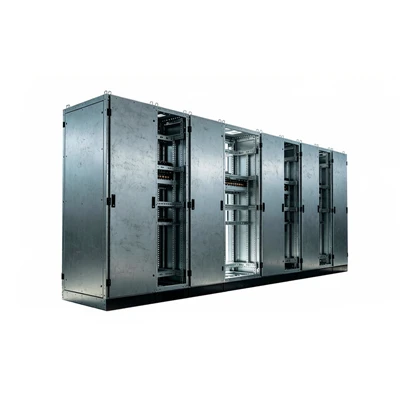
As a supplier, our job isn’t just to sell you a machine—it’s to make sure it runs for years, and to avoid the costly mistakes that come with power misalignment. I’ve seen too many shops lose money because they skipped this step, and too few take the time to get it right. The right power setup doesn’t just make your machinery work—it makes your whole shop run more efficiently, with less downtime, less waste, and less frustration. If you’re in the market for new sheet metal fabrication machinery, or you’re looking to upgrade your existing power setup to get better performance, reach out to our team. We’ll walk you through every spec, connect you with licensed electricians who specialize in industrial machinery, and make sure you get the exact power solution that fits your shop’s needs, no hidden costs or fine print.
Sheet Metal Cabinet References
- National Electrical Manufacturers Association (NEMA). (2020). Standard for Electrical Power and Control Circuits for Industrial Machinery. NEMA Publication ICS 1.
- Occupational Safety and Health Administration (OSHA). (2022). Electrical Safety in Manufacturing Facilities. OSHA Publication 3314-01.
- Sheet Metal and Air Conditioning Contractors’ National Association (SMACNA). (2021). Guidelines for Power Requirements for Sheet Metal Fabrication Equipment. SMACNA Technical Bulletin 102.
Hefei Excellent Intelligent Technology Co., Ltd.
As one of the most professional sheet metal fabrication machinery manufacturers in China, we’re featured by quality products and good service. Please rest assured to wholesale bulk customized sheet metal fabrication machinery made in China here from our factory. Also, pricelist is available.
Address: No. 3 Jingyi Road, Douzhen Industrial Park, Gangji Town, Changfeng County, Hefei City, Anhui Province
E-mail: 1637201948@qq.com
WebSite: https://www.cnakst.com/
