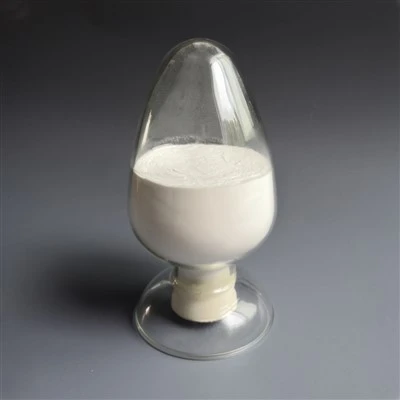
As a supplier of boehmite, I’ve witnessed the growing demand for this versatile material across various industries. Boehmite, a crystalline aluminum oxide hydroxide, offers excellent thermal stability, mechanical strength, and chemical resistance. However, in many applications, modifying its surface properties can significantly enhance its performance and compatibility with other materials. In this blog post, I’ll share some insights into how to modify the surface properties of boehmite and the benefits it can bring. Boehmite
Understanding the Need for Surface Modification
Boehmite, in its natural state, has a hydrophilic surface due to the presence of hydroxyl groups. While this property is advantageous in some applications, such as water – based systems, it can pose challenges in others. For example, in polymer composites, the hydrophilic surface of boehmite may lead to poor dispersion and weak interfacial adhesion with hydrophobic polymers. Surface modification can address these issues by altering the surface chemistry, improving dispersion, adhesion, and overall performance.
Methods of Surface Modification
Chemical Grafting
One of the most effective ways to modify the surface of boehmite is through chemical grafting. This method involves attaching functional molecules or polymers to the surface of boehmite particles. For instance, silane coupling agents are commonly used in this process. Silane coupling agents have a general formula of R – Si(OR’)₃, where R is an organofunctional group and OR’ is a hydrolyzable group.
When silane coupling agents are applied to boehmite, the hydrolyzable groups (OR’) react with the hydroxyl groups on the boehmite surface, forming covalent bonds. The organofunctional group (R) can then interact with the matrix material, such as a polymer. For example, if we use a silane coupling agent with a vinyl group, it can participate in the polymerization reaction of vinyl – based polymers, improving the interfacial adhesion between boehmite and the polymer.
The process of chemical grafting with silane coupling agents typically involves the following steps:
- Hydrolysis: The silane coupling agent is first hydrolyzed in an aqueous or alcohol – water solution. This step converts the alkoxy groups (OR’) into silanol groups (Si – OH).
- Condensation: The silanol groups react with the hydroxyl groups on the boehmite surface, forming Si – O – Al bonds.
- Curing: The grafted boehmite is then dried and cured to ensure the stability of the grafted layer.
Coating
Coating is another popular method for surface modification of boehmite. In this method, a thin layer of a coating material is applied to the surface of boehmite particles. The coating material can be a polymer, a metal oxide, or a ceramic.
Polymer coating can improve the dispersion of boehmite in polymer matrices and enhance its compatibility. For example, coating boehmite with a thin layer of polyethylene can make it more compatible with polyethylene – based polymers. The coating process can be carried out through various techniques, such as solution casting, emulsion polymerization, or in – situ polymerization.
Metal oxide or ceramic coating can improve the thermal and chemical stability of boehmite. For example, coating boehmite with silica can enhance its resistance to high – temperature oxidation. The coating can be applied using techniques such as sol – gel methods, where metal alkoxides are hydrolyzed and condensed on the surface of boehmite particles to form a metal oxide or ceramic layer.
Plasma Treatment
Plasma treatment is a physical method for surface modification of boehmite. Plasma is a partially ionized gas that contains ions, electrons, and neutral particles. When boehmite is exposed to plasma, the energetic particles in the plasma can interact with the surface of boehmite, leading to various surface changes.
Plasma treatment can clean the surface of boehmite by removing contaminants and weak boundary layers. It can also introduce new functional groups on the surface. For example, oxygen plasma can introduce oxygen – containing functional groups, such as hydroxyl and carbonyl groups, which can improve the hydrophilicity of boehmite. On the other hand, nitrogen plasma can introduce nitrogen – containing functional groups, which can enhance the reactivity of boehmite with certain materials.
The advantages of plasma treatment include its ability to modify the surface without significantly affecting the bulk properties of boehmite, and it is an environmentally friendly process as it does not require the use of large amounts of chemicals.
Benefits of Surface – Modified Boehmite
Improved Dispersion
Surface – modified boehmite has better dispersion in various matrices. For example, in polymer composites, the modified surface can reduce the agglomeration of boehmite particles, leading to a more uniform distribution. This uniform dispersion improves the mechanical properties of the composite, such as tensile strength, flexural strength, and impact resistance.
Enhanced Adhesion
The surface modification can improve the interfacial adhesion between boehmite and the matrix material. In polymer composites, better adhesion means that stress can be more effectively transferred from the polymer matrix to the boehmite particles, resulting in improved overall performance. In coatings, enhanced adhesion between boehmite and the coating matrix can improve the durability and scratch resistance of the coating.
Tailored Surface Properties
Surface modification allows us to tailor the surface properties of boehmite to meet specific application requirements. For example, we can make boehmite more hydrophobic or hydrophilic, more reactive or inert, depending on the needs of the application. This flexibility makes boehmite a more attractive material for a wider range of applications.
Applications of Surface – Modified Boehmite
Polymer Composites
Surface – modified boehmite is widely used in polymer composites. It can be added to thermoplastics, thermosets, and elastomers to improve their mechanical, thermal, and flame – retardant properties. For example, in polypropylene composites, surface – modified boehmite can enhance the stiffness and heat distortion temperature of the composite.
Coatings
In the coatings industry, surface – modified boehmite can be used as a functional filler. It can improve the hardness, scratch resistance, and chemical resistance of coatings. For example, in automotive coatings, boehmite with a modified surface can enhance the durability of the coating, protecting the car body from environmental damage.
Catalysis
Surface – modified boehmite can also be used in catalysis. The modified surface can provide active sites for catalytic reactions. For example, boehmite with a metal – coated surface can be used as a catalyst support for various chemical reactions, such as hydrogenation and oxidation reactions.
Conclusion

Modifying the surface properties of boehmite is a powerful way to enhance its performance and expand its applications. Through methods such as chemical grafting, coating, and plasma treatment, we can tailor the surface chemistry of boehmite to meet the specific needs of different industries. The benefits of surface – modified boehmite, including improved dispersion, enhanced adhesion, and tailored surface properties, make it a valuable material in polymer composites, coatings, catalysis, and many other fields.
Aluminum Hydroxide If you are interested in exploring the potential of surface – modified boehmite for your applications, I encourage you to reach out to us for further discussion. Our team of experts is ready to work with you to understand your requirements and provide the most suitable boehmite products. Whether you need a small – scale sample for testing or a large – volume supply for production, we can offer high – quality boehmite with customized surface properties. Contact us today to start a productive partnership!
References
- Boccaccini, A. R., & Zhitomirsky, I. (Eds.). (2004). Handbook of bioactive ceramics and glasses: Volume 1: Processing and structure. Woodhead Publishing.
- Favier, V., Canova, G. F., & Delhaes, P. (1995). Nanocomposite polymer materials: Preparation, properties and applications. Materials Science and Engineering: R: Reports, 16(5 – 6), 295 – 315.
- Lifshitz, Y., & Willner, I. (Eds.). (2001). Supramolecular catalysis. Wiley – VCH.
Luoyang Zhongchao New Material Co., Ltd.
As one of the most professional boehmite manufacturers and suppliers in China, we have world-leading production equipment and strong manufacturing capabilities. Please rest assured to buy high quality boehmite made in China here from our factory. For price consultation, contact us.
Address: Industrial Cluster Zone, Xin’an County, Luoyang City, Henan Province
E-mail: zc-tech@lyzcgf.com
WebSite: https://www.zc-aths.com/
