Hey there! As a hijab supplier, I’ve gotten tons of questions about whether the hijab is mandatory in Islam. It’s a topic that stirs up a lot of conversation and debate, and I’m here to chat about it from a bunch of different angles. Hijab

First off, let’s dig into the religious side. When you look at the Quran, the holy book of Islam, there are verses that are often interpreted as calling for modest dress for both men and women. The word "hijab" itself, in a literal sense, means a partition or curtain. In the context of Muslim women’s fashion, it usually refers to the head – scarf.
Some Muslims believe that wearing the hijab is clearly commanded in the Quran. For example, Surah An – Nur, verse 31 says something like, "And tell the believing women to lower their gaze and guard their modesty; and to draw their head – coverings over their bosoms and not to display their beauty except to their husbands…" Based on this and other similar verses, many devout Muslim women see the hijab as a religious obligation. It’s a way for them to show their obedience to God and their commitment to their faith.
But it’s not that simple for everyone. There are different schools of thought within Islam. Some scholars interpret these verses more liberally. They say that the main idea is about modesty in general, and the hijab is just one way to achieve that. They believe that as long as a woman dresses modestly, she doesn’t necessarily have to wear a hijab. For example, a woman could choose to wear a long, loose – fitting dress that covers the body in a modest way without a head – covering.
Culturally, the hijab has come to mean different things in different parts of the world. In some countries, like Saudi Arabia, wearing the hijab (or even more covering clothing like the abaya) is enforced by law. In these places, it’s often seen as part of the national and religious identity. Women grow up with the understanding that wearing the hijab is just a normal part of life, and it becomes a symbol of belonging to their community.
On the other hand, in Western countries, many Muslim women wear the hijab as an expression of their identity and faith in a predominantly non – Muslim environment. It can be a way for them to stand out and show pride in their religion, even when it might make them a bit different from their peers. But there are also Muslim women in Western countries who choose not to wear the hijab. They might feel that they can still be good Muslims and live their faith in other ways without wearing the head – covering.
There’s also the issue of pressure. Some women face pressure from their families or communities to wear the hijab. It can be a difficult situation because they might not be fully convinced about its religious necessity, but they don’t want to disappoint their loved ones. And on the flip side, in some non – Muslim majority areas, Muslim women who wear the hijab might face discrimination or negative reactions.
As a hijab supplier, I see all these different perspectives play out every day. I’ve got customers who are die – hard believers that the hijab is a must – have for any practicing Muslim woman. They come to me looking for high – quality, stylish hijabs that they can wear as a sign of their faith. They appreciate a wide variety of colors, fabrics, and designs because they want to express their personal style while still adhering to what they believe is a religious requirement.
Then there are the customers who are more on the fence. They might be trying out different styles of hijabs to see if it’s something they feel comfortable with. They’re interested in learning more about the religious and cultural aspects and how it fits into their lives. I often have in – depth conversations with these customers, answering their questions and sharing different viewpoints.
I also deal with customers who choose not to wear the hijab but still love the aesthetic of our products. They might buy hijabs as scarves to wear in non – religious, fashion – forward ways. It’s really interesting to see how the hijab has transitioned from being just a religious item to also being a trendy fashion accessory in some circles.
The question of whether the hijab is mandatory in Islam doesn’t have a one – size – fits – all answer. It’s a complex topic that combines religious doctrine, cultural norms, personal beliefs, and societal pressures. Every Muslim woman has the right to make an informed decision based on her own understanding of her faith and what she feels comfortable with.
If you’re someone who’s thinking about buying hijabs, whether it’s for religious reasons, fashion, or just to try something new, I’d love to talk to you. We’ve got a wide range of hijabs in different styles, from the traditional and classic to the modern and trendy. We source high – quality fabrics to ensure that our hijabs are not only beautiful but also comfortable to wear.
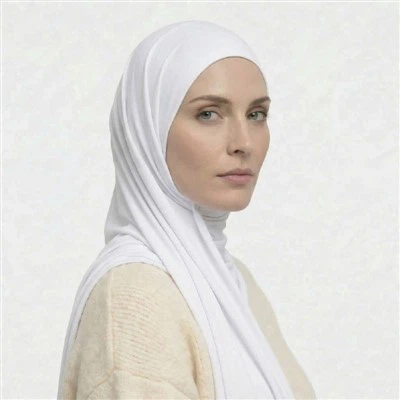
If you’re interested in starting a conversation about purchasing hijabs in bulk for your business or just want to chat about different styles and options, don’t hesitate to get in touch. We’re here to help you find the perfect hijabs that suit your needs and preferences.
Modal Hijab References
- The Quran, various translations and interpretations
- Books on Islamic jurisprudence and theology
- Academic articles on Islamic culture and women’s issues in Islam
Yiwu Wennuan Clothing Co., Ltd.
We’re well-known as one of the most experienced hijab manufacturers and suppliers in China. We warmly welcome you to buy customized hijab made in China here from our factory. If you have any enquiry about cooperation, please feel free to email us.
Address: 2nd Floor, Building B, No.17 Jinhui Road, Heyetang Industrial Zone, Futian Street, Jinhua, Zhejiang, China
E-mail: wennuan@wennuanfactory.com
WebSite: https://www.wennuanhijab.com/
