If you’ve ever worked with construction hardware die casting molds, you know that even a tiny variation in product shrinkage can throw off an entire project. Last month, I had a customer hit me up totally stressed—their door hinges, cast in zinc alloy, were coming out 0.5mm smaller than the CAD specs, and they were stuck reworking 2,000 parts at their own cost. That’s the thing about shrinkage: it’s not some random flaw, it’s a chain reaction of small, avoidable factors. As someone who’s been supplying custom die casting molds for construction hardware for 12 years, I’ve seen this play out way too many times. Today I’m breaking down the real, actionable factors that make your cast parts shrink, plus how we adjust our molds to help you dodge that headache. Construction Hardware Die Casting Mold
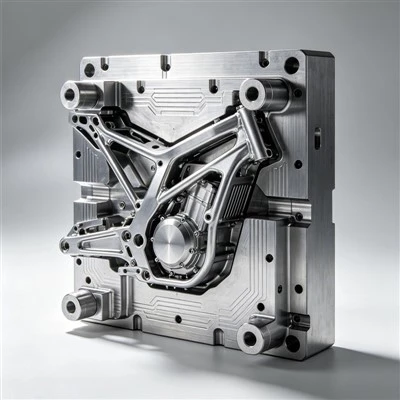
First, let’s get one thing straight: shrinkage isn’t just “metal getting small as it cools.” For construction hardware, we’re usually working with aluminum, zinc, or sometimes brass alloys—each shrinks different, and that’s the base line. But here’s the kicker: 60% of shrink issues we fix at our shop aren’t from the alloy itself, they’re from mold design and process choices I see way too many teams overlooking.
Let’s start with the basics: alloy selection and its inherent shrinkage rate. Not all zinc or aluminum is the same. For example, Zamak 3 is the workhorse for door latches and window handles—everyone uses it because it’s cheap and casts smooth. But Zamak 3 has a linear shrinkage rate of about 0.5% at room temperature, while Zamak 5 is closer to 0.45% because of its higher copper content. That 0.05% difference might sound tiny, but if you’re making a 6-inch gate hinge, that’s a 0.003-inch gap—wait, no, wait, let’s do the math right: 6 inches times 0.5% is 0.03 inches, times 0.05% is 0.003, right. That’s enough to make a hinge not sit flush, so it wiggles. And if you’re using aluminum for larger parts like fence posts, A380 aluminum has a shrink rate of ~0.7%, but if you mix in too much silicon (some low-cost alloy blends cut silicon to save money), that jumps to 0.8% because silicon changes how the metal solidifies. I once had a customer switch to a cheap aluminum alloy for their garage door tracks to save 10 cents per pound, and their shrinkage spiked 0.2%—total disaster. So if you’re chasing alloy costs, you’re risking shrinkage before you even hit the start button.
Next up: mold design geometry, and this is where our team at the shop does the most tweaking. I can’t tell you how often we get a CAD file where the part has thick, uneven walls. Construction hardware, by the way, is usually made for durability—so people make walls thicker than they need to, but that’s a shrink ticking time bomb. When metal solidifies, it starts from the outside of the mold and moves inward. Thick walls take longer to cool, so the core shrinks as it cools, and since the outside is already set, it pulls the entire part inward. For example, a heavy-duty door hinge bracket with a 10mm wall will shrink 2x more than a 5mm wall, even with the same alloy. We actually add “shrinkage compensation” to our mold designs by default, but only if we get a note on the part geometry. Like, if you have a thick section, we don’t just make the mold size match the CAD—we oversize that section by 0.2% to account for the extra shrink. Another design thing: runner and gate placement. The runner is the channel that brings molten metal into the mold cavity, and the gate is where it enters. If you put the gate on a thick part of the part, that area cools slower, so it shrinks more. Last quarter, a customer brought in a mold we made for them that had bad hinge shrinkage—turns out they moved the gate to the thinner end of the hinge to speed up production. We just modified the mold’s gate position for free, and their shrinkage went from 0.6% to 0.3% in one run. Even draft angles matter? Wait, yeah—if a part has a deep core pin (like a hollow lock cylinder), the draft angle affects how the metal shrinks against the pin. Too little draft, and the metal sticks, pulling extra shrink as it ejects. We always add 1.5 degrees of draft to core pins for construction hardware, and that cuts shrink variation by almost half.
Then there’s process parameters, and this is the big one that’s easy to mess up on the shop floor. First, molten metal temperature. If you pour it too hot, it stays liquid longer, so it shrinks more as it cools. If it’s too cold, it solidifies before filling the cavity, leading to voids that make the part look like it’s shrunk (wait, no—voids are porosity, which can make parts warp, but actual shrinkage is linear). For Zamak 3, we recommend 410°C, but if a shop runs it at 430°C just to fill tricky parts, shrinkage jumps 0.15%—that’s enough to make a window sash alignment off. On the flip side, die casting pressure: if you don’t apply enough hold pressure while the metal solidifies, the cavity can’t stay full as the metal shrinks. Hold pressure is key—think of it like pushing the metal into the mold as it tries to get smaller. For construction hardware parts, we suggest a hold pressure of 800 bar for aluminum, 500 bar for zinc. I had a farm equipment hardware client last year who was running hold pressure at 550 bar to save electricity, and their gate area was shrinking 0.2mm too much. We told them to bump it up, and their shrinkage was perfect. Also, cooling rate—many shops use water lines in the mold, but if those lines are spaced too far apart, the mold cools unevenly. Thick areas cool slower, shrink more. We design our molds with cooling lines spaced 25mm apart for construction hardware, which is tighter than the industry standard, but it keeps shrink variation within ±0.05% across the entire part.
Wait, there’s another factor people don’t talk about: mold wear. Construction hardware molds get beat up—you’re casting thousands of parts a day, abrasive metal flows through the mold, and that wears down the cavity walls over time. When the cavity walls wear, the inside of the mold gets a tiny gap, so when the metal cools and shrinks, it doesn’t have the tight surface it did when the mold was new. We had a client who ran a zinc hinge mold for 50,000 parts, and their shrinkage went from 0.45% to 0.55%—they thought it was the alloy, but it was just mold wear. We re-polished the cavity and added a wear coating (we use electroless nickel-phosphorus with Teflon for construction hardware molds) and their shrinkage went back to normal. That’s why we offer mold maintenance packages—for every 50,000 cycles, we send a tech to check cavity wear and adjust, which saves our customers a ton of rework.
Also, part ejection timing. If you eject the part too early, while it’s still hot and soft, it can deform as it’s pulled out, which looks like shrinkage. For thick construction hardware parts, you need to wait 2-3 seconds after the cycle ends to eject—let it cool enough to hold its shape. If you eject at 1.5 seconds, the part can stretch a little as it comes out, leading to inaccurate dimensions that read like shrinkage. I’ve seen shops skip that step to run more parts per hour, and it’s a costly mistake.
Let me wrap this up with a real example to make it concrete. Last winter, a large door hardware supplier came to us with a critical problem: their commercial-grade deadbolts were failing QA because the bolt cylinder was shrinking 0.6mm, so it wouldn’t fit into the strike plate. They were using a Zamak 3 alloy, had a mold design with 8mm wall thickness, and their process parameters were 425°C metal temp, 450 bar hold pressure, and cooling lines spaced 30mm apart. We tweaked three things for them: first, we modified the mold to reduce the cylinder’s wall thickness from 8mm to 5mm with gradual transitions (no sharp thick spots) to cut shrink. Second, we adjusted the gate position from the thick end to the thin end of the cylinder to keep pressure even during solidification. Third, we recommended a metal temp of 410°C and hold pressure of 500 bar, plus spaced cooling lines 25mm apart. After the first run, their shrinkage dropped to 0.4%, which was exactly what they needed. They ran 200,000 parts without a single shrink-related failure, and saved $12,000 in rework costs that month.

Here’s the thing: shrinkage isn’t something you have to accept as a “normal” part of die casting construction hardware. Most of the time, it’s a combination of small, avoidable choices—wrong alloy, bad mold geometry, off process parameters, mold wear. As a construction hardware die casting mold supplier, our job isn’t just to send you a mold that makes parts—it’s to make sure those parts hit your specs, shrink and all. If you’re dealing with shrinkage issues on your current parts, or you’re designing a new line of hinges, latches, or fence hardware, hit us up. We’ll walk through your CAD files, break down the factors that might be causing your shrink, and adjust our mold design and recommendations to get you consistent, quality parts without the rework headache.
Magnesium Alloy Die Casting Mold References
- Campbell, J. (2015). Casting Practice: Process, Design, and Simulation. Butterworth-Heinemann.
- German, R. M. (2009). Shrinkage and Shape Change in Metal Processing. CRC Press.
- Society of Die Casting Engineers. (2021). Die Casting Handbook for Construction Hardware Applications.
Hangzhou Pullbull Technology Co., Ltd.
As one of the most professional construction hardware die casting mold manufacturers and suppliers in China, we offer a wide range of products with superior quality. Please feel free to wholesale bulk premium construction hardware die casting mold from our factory. Also, custom service is available.
Address: Rm 805 Gemini Build 1, #1785 JiangHan Rd, BinJiang, Hangzhou, China 310052
E-mail: markdan@menovo.cn
WebSite: https://www.pbmold.com/
