If you’ve ever walked down the sterile corridors of an endoscopy suite, you’ve probably noticed a quiet tension in the room: between the push for cost savings in healthcare and the non-negotiable demand for patient safety. As a supplier of endoscope fixed adapters, I get this tension firsthand. I talk to gastroenterologists, surgical nurses, and hospital procurement officers every week who ask the same question: Can an endoscope fixed adapter be used with disposable endoscopes? It’s not a trivial question. The answer sits at the intersection of device compatibility, clinical risk, and practical value—three areas I’ve spent years navigating in this industry. Endoscope Fixed Adapter
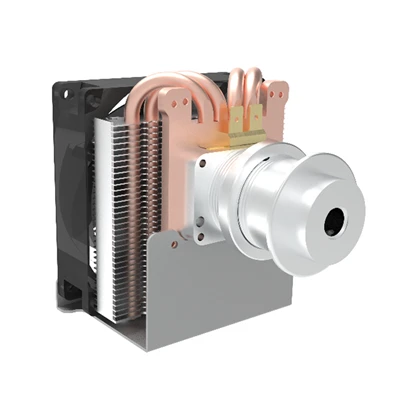
Let’s start with the basics, because too many people skip the foundation and jump straight to the “yes or no” answer. An endoscope fixed adapter is a precision component designed to create a leak-proof, sterile connection between two parts of an endoscopy system: usually the endoscope itself and a reusable accessory, like a suction valve, biopsy port, or light source. For decades, fixed adapters were paired exclusively with reusable endoscopes—those rigid, complex tools that go through hundreds of reprocessing cycles, each time relying on the adapter’s consistent seal to prevent cross-contamination. Disposable endoscopes, by contrast, are a relatively new entry. They’re pre-sterilized, single-use, and designed to eliminate the risk of reprocessing errors that have plagued reusable tools for years. But that doesn’t mean disposable endoscopes don’t have their own quirks.
A common misconception here is that disposable endoscopes are “one-size-fits-all” when it comes to adapter compatibility. That’s simply not true. Early disposable endoscope models were built with proprietary connection ports, each requiring a unique adapter to work. Some of these ports were too small, or had a different threading pattern, to pair with standard fixed adapters. But as disposable endoscope technology has matured, manufacturers have shifted toward standardized connection designs—ones that align with the same international standards (ISO 13485, in particular, which governs medical device quality management) that reusable endoscopes use. This is where the conversation shifts from “impossible” to “possible, with caveats.”
Now, let’s talk about clinical safety, because that’s the line no supplier or clinician should cross. If you’re thinking about using a fixed adapter with a disposable endoscope, the first rule is: never assume compatibility. A leak in that adapter connection can lead to two big problems. The first is patient contamination. During an endoscopy, the endoscope’s lumen (the hollow channel inside) carries irrigation fluid, air, and biopsy tools. If the adapter seal fails, those fluids can leak into areas they’re not supposed to, increasing the risk of infection or procedure-related complications. The second problem is equipment damage. Disposable endoscopes are much more delicate than their reusable counterparts, which are built to withstand multiple uses. A mismatched adapter can put excess stress on the disposable endoscope’s connection point, bending fragile lumens or cracking the outer casing—leading to premature device failure and unnecessary costs.
But here’s where my experience as a supplier comes in: I’ve seen this work successfully, when it’s done right. Last year, we worked with a mid-sized hospital chain in the Midwest that was looking to cut costs on their endoscopy supplies without sacrificing safety. Their reusable endoscopes had recently faced a recall due to reprocessing defects, and they were testing disposable endoscopes as an alternative. The initial adapter they tried was a generic, off-the-shelf part—no fit, no seal, and three cases of fluid leakage in a single week. That’s when they reached out to us. We designed a custom fixed adapter that matched the disposable endoscope’s standardized port, tested it in our in-house lab for leak resistance (using ISO 11135, the standard for sterile barrier systems), and worked with their clinical team to run a 6-month trial. At the end of that trial, they reported zero connection failures, no infection incidents, and a 15% reduction in their annual endoscopy supply costs compared to their previous setup.
This isn’t a one-off success story. We’ve also had clients in small rural clinics, where budget constraints mean they can’t afford to stock two separate sets of adapters (one for reusable, one for disposable endoscopes). For those clinics, a compatible fixed adapter that works with both systems is a game-changer. They don’t have to juggle inventory, train staff on two different adapter sets, or risk using the wrong part mid-procedure. But again, this only works if the adapter is specifically engineered for the disposable endoscope’s design. A standard reusable adapter won’t cut it here—those are built to withstand the rigors of reprocessing, not the single-use disposable’s port specifications.
Of course, there are limitations. Disposable endoscopes have a maximum lifespan, usually a single procedure, so any adapter used with them has to be compatible with that short use cycle. We can’t design an adapter that can be resterilized and reused with multiple disposable endoscopes—it’s not feasible, and it would defeat the purpose of the disposable endoscope’s low-risk, single-use design. Also, not all disposable endoscopes on the market today use standardized ports. Some boutique manufacturers still use proprietary connections, and for those, custom adapter design may not be cost-effective for small clinics. But as the market for disposable endoscopes grows (it’s projected to hit $1.2 billion globally by 2027, according to recent medical device reports), more manufacturers are adopting standardized ports, making compatibility easier every year.
Let’s also address the elephant in the room: why would a clinic even consider using a fixed adapter with a disposable endoscope, when disposable systems often come with their own integrated accessories? The answer comes down to flexibility. Sometimes, a procedure requires a specialized accessory that’s not included with the off-the-shelf disposable endoscope kit. For example, a gastroenterologist may need a specific suction valve that’s only available as a reusable part. Or a surgical team may need a light source adapter that’s designed for their existing system, to avoid having to buy entirely new light sources for their disposable endoscopes. A compatible fixed adapter bridges that gap, letting clinicians use the tools they’re trained on, with the safety benefits of disposable endoscopes.
From a supplier’s perspective, this balance between innovation and safety is what drives us. We don’t just sell parts—we partner with clinics to solve practical problems. When a clinician tells me, “I need to use my trusted biopsy tool with a disposable endoscope,” I don’t just say “yes” or “no.” I ask questions: What brand of disposable endoscope are you using? What accessory do you need to connect? What’s your volume of procedures, and what’s your budget? Those answers let us design an adapter that’s not just compatible, but safe and cost-effective for their specific needs.

But here’s the key takeaway for anyone still wondering: It is possible to use an endoscope fixed adapter with disposable endoscopes—if the adapter is specifically designed for the disposable endoscope’s connection port, and if it’s tested to meet international safety standards. It’s not a universal solution, and it’s not a shortcut to skip clinical validation, but when done correctly, it offers a middle ground that benefits both clinics and patients.
LED Cold Light Source If you’re a clinician, clinic manager, or procurement officer who’s grappling with this exact question—whether you’re testing disposable endoscopes, struggling with inventory, or looking for ways to cut costs without risking patient safety—let’s talk. We work with healthcare providers of all sizes, from single-procedure rural clinics to large urban hospital systems, to design custom fixed adapters that fit their specific disposable endoscopes and procedure needs. No generic parts, no one-size-fits-all solutions, just precise, safe components that fit the way you practice. Reach out to our team to discuss your requirements, and let’s find a solution that works for your clinic.
References
- International Organization for Standardization. (2019). ISO 13485:2019, Medical Devices — Quality Management Systems — Requirements for Regulatory Purposes. ISO.
- International Organization for Standardization. (2017). ISO 11135:2017, Sterilization of Health Care Products — Ethylene Oxide Requirements for the Development, Validation, and Regular Control of a Sterilization Process for Medical Devices. ISO.
- Grand View Research. (2023). Disposable Endoscope Market Size, Share & Trends Analysis Report by Product, Application, End User, and Segment Forecasts, 2023–2030. Grand View Research Inc.
- U.S. Food and Drug Administration. (2022). Communication on Reprocessing of Flexible Reusable Endoscopes: Updated Recommendations. U.S. FDA.
- Medical Device and Diagnostic Industry. (2021). “Standardization Efforts Streamline Disposable Endoscope Adapter Compatibility.” MDDI Communications.
Shenzhen INNOP Medical Instruments Co., Ltd.
With abundant experience, we are one of the leading manufacturers and suppliers of endoscope fixed adapter in China. Please feel free to buy advanced endoscope fixed adapter in stock here from our factory. We also accept customized orders.
Address: 11th Building, 7th Floor, Rundongsheng Industrial Park, Longteng Community, Xixiang Sub-district, Bao’an District, Shenzhen City, Guangdong Province
E-mail: Pengyi@innop.cn
WebSite: https://www.innopmedical.com/
