Hey there, fellow engineers, plant managers, and anyone who’s ever dealt with equipment that just won’t connect properly – let’s cut to the chase: industrial connectors aren’t just little plastic-and-metal plugs you swap out when something breaks. I’m part of a industrial connectors supplier team that’s spent years working with folks across manufacturing, energy, automation, and logistics, and let me tell you, picking the wrong one can turn a routine maintenance job into a 3-hour headache in 100°F warehouse heat, or even shut down a whole assembly line. No one wants that, right? Industrial Connectors
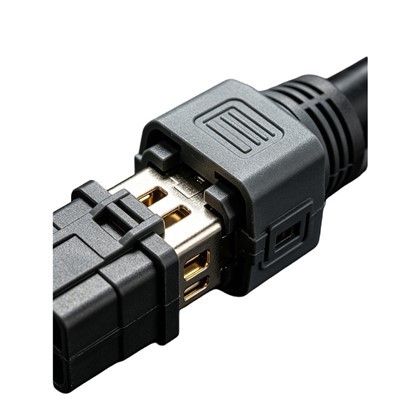
I’ve seen it all: a food processing plant that used a regular plastic connector near their high-temperature oven, only to have it warp and leak product; a wind farm tech who grabbed a off-the-shelf connector for a turbine blade, not realizing it couldn’t handle the constant vibration, leading to a costly shutdown mid-storm; and even a small robotics shop that went cheap on corrosion resistance, only to have their conveyor system seize up after six months in their humid workshop. So today, I’m breaking down how to actually choose the right connector, not just what sounds good on a spec sheet. This isn’t some textbook fluff – it’s the stuff we’ve learned from answering 100+ “which connector do I need?” questions every month.
First up, stop ignoring the operating environment. This is the make-or-break factor, and it’s way more than just “outdoor vs indoor.” Let’s get specific. Are you working in a factory where there’s dust, metal shavings, or even oil mists? Those tiny particles can sneak into a loose connector, cause a short, or wear down the pins over time. We recently had a customer in auto manufacturing who was using a standard IP20 connector (that’s just dust-resistant to big stuff, right?) in their stamping area – the metal shavings got between the male and female pins, arced, and burned out a $500 sensor. Switched them to an IP67-rated connector, which is dust-tight and can handle temporary immersion, and they haven’t had a issue in two years.
Then there’s temperature. If you’re in a furnace room or a desert solar installation, you need connectors that can handle extreme heat – regular plastic will melt, and the metal pins can expand too much, loosening the connection. On the flip side, cold storage facilities or arctic construction? Low temperatures make some plastics brittle, so you need polycarbonate or stainless steel housings here. And don’t forget moisture: if it’s near water, like a brewery, wastewater treatment plant, or even a marina, skip the connectors that say “water-resistant” (that’s a vague term) and go for IP65, IP67, or even IP69K if you’re hosing down equipment regularly. Those are standardized ratings, so you know exactly what you’re getting – no surprises.
Next, power and signal needs. This is where a lot of folks mix up two basic types: power connectors and signal connectors. Power connectors are for moving high voltage or current – like motors, heaters, or heavy machinery. If you use a signal connector (the small, delicate ones for sensors or data) for power, you’ll burn it out instantly. We had a customer in a packaging plant do exactly that – they grabbed a 2-pin signal connector for their 12V conveyor motor, and it melted within 10 minutes. No joke. For power, pay attention to amperage: a connector rated for 10A can’t handle 20A, even if the physical plug fits. For signal, think about how much data you’re transferring: if it’s just a simple on/off signal for a limit switch, a basic 3-pin works, but if you’re sending Ethernet or camera data, you need a connector that’s rated for high-frequency signals (like M12 X-coded connectors, which we stock plenty of). Also, check the voltage rating – a 12V connector is way different from a 480V one, and mixing them up is a fire hazard, plain and simple.
Vibration and mechanical stress are huge too, especially in mobile equipment or areas with heavy machinery – think forklifts, cranes, wind turbines, or even the back of a delivery truck that’s bouncing down a bumpy road. Standard connectors that just snap together can loosen over time, leading to intermittent connections or total disconnections. That’s where locking mechanisms come in: screw locks, bayonet locks (the twist-and-click ones), or push-pull locks. Bayonet locks are super popular in aerospace and wind energy because they’re quick to connect and stay tight even through severe vibration. We also have a lot of customers in agriculture who use our screw-lock connectors on their tractors – they work through all the rough plowing and harvesting without coming loose. Another thing: pin count. If you’re combining power and signal in one connector (which a lot of folks do to save space), make sure the pins are arranged so they can’t cross – that’s a bad time. We’ve seen someone plug a power pin into a signal slot, and it took out a whole control panel. Ouch.
Material matters too, beyond just housing. The contact pins inside the connector – that’s where the actual electricity flows – are usually made of copper, but they’re plated with different metals for durability. Tin plating is cheap, but it corrodes quickly, especially in humid or chemical environments. Gold plating is great for signal connectors because it’s corrosion-resistant and has low resistance, but it’s overkill for power connectors – you’ll pay more for something you don’t need. For power, nickel or silver plating is better – silver has low resistance, so it doesn’t heat up as much under high current, and nickel is hard, so it resists wear. The housing material: plastic (nylon, polycarbonate) is light and cheap, good for indoor or low-stress applications. Stainless steel or zinc alloy is heavy and strong, perfect for outdoor, high-vibration, or corrosive environments (like chemical plants or coastal areas where salt air eats away at metal). We even have connectors with nickel-plated brass housings for that middle ground – durable but not as heavy as full stainless steel.
Don’t forget compliance and standards. This is another area where people get lost, but it’s non-negotiable. If you’re working in the EU, you’ll need connectors that meet CE ratings. For North America, UL listings are key – a UL-listed connector means it’s been tested for safety, so you don’t have to worry about it failing and causing a fire or injury. There are also industry-specific standards: for food and beverage, there’s EHEDG certification, which means the connector is easy to clean and doesn’t have any crevices where bacteria can grow. For automotive, there’s ISO 16750 for environmental testing, and for robotics, there’s IEC 61076 for industrial connectors. Cutting corners here might save you a buck upfront, but if you get audited, or worse, have a failure that’s traced back to a non-compliant connector, you’re looking at way bigger costs.
Wait, let’s talk about something a lot of people overlook: mating and unmating frequency. If you’re connecting and disconnecting a connector a lot – like in a maintenance shop where you swap out parts every day – you need one that’s designed for high cycle counts. A basic connector might only handle 100-500 mated/unmated times before the pins wear out, but a heavy-duty one can do 10,000+. We have a customer in electronics manufacturing who does daily testing of their boards, so they switched to our high-cycle connectors and cut their replacement cost by 70% – because they weren’t throwing out cheap connectors every week. On the flip side, if you’re using a connector that’s rarely disconnected (like a permanent installation in a wind turbine), you don’t need to pay for high cycle counts – you can go for a more durable, lower-cost option that fits the job.
And let’s not skip cost – but I’m not saying “go cheap” here, I’m saying “calculate total cost of ownership.” A $5 connector that fails every 6 months costs $20 a year. A $15 connector that lasts 5 years costs $3 a year. That’s a no-brainer, right? We had a customer in a mining operation who tried saving 50 cents per connector, and within a year, they’d spent $12,000 on replacements and downtime costs. Switched to our mid-range heavy-duty connectors, and their annual cost dropped to under $2,000. Downtime is way more expensive than the connector itself – a factory can lose $10,000 an hour or more when a line is down. So think long term, not just the upfront price tag.
Now, let’s put this all together with a quick checklist, because I know you’re busy and don’t have time to read a 3,000-word list in your head. When you’re picking a connector, ask yourself these 7 questions:
- What environment will this connector be in? (Dust, water, temperature, chemicals, vibration?)
- Is this for power or signal, and what’s the voltage/amperage?
- Do I need a locking mechanism to prevent loosening?
- What material do I need for the housing and contact pins?
- Are there any industry standards I have to meet? (CE, UL, EHEDG, etc.)
- How often will I mate/unmate this connector?
- What’s the total cost, including downtime if it fails?
I’ve used this checklist with every customer, and 9 times out of 10, it narrows it down to 2 or 3 options, no guesswork needed. Of course, there are always edge cases – like if you’re working with something super specific, like a subsea robot or a medical device, and you need something custom. That’s where we come in – we don’t just sell off-the-shelf connectors; we work with customers to design ones that fit their exact needs. I can’t tell you how many times a customer has come to us with a problem that’s not covered in standard specs, and we’ve whipped up a custom connector that solves it.
Wait, let’s add a real quick story to drive this home. Last month, a customer in a grain storage facility hit us up, panicking. Their old connectors for the conveyor belt were failing every few months – grain dust and high humidity were getting in, corroding the pins, and the vibration from the conveyors was loosening them. They’d tried three different brands, all cheap, and nothing worked. We recommended our IP67-rated M12 connectors with bayonet locks, silver-plated contacts, and polycarbonate housings. We also gave them a bulk discount since they needed 200 units. A week later, they texted us saying they installed them, and they’re still running strong – no corrosion, no loosening, no downtime. That’s exactly what we’re here for.
At the end of the day, industrial connectors are the unsung heroes of industrial equipment. They’re the link that makes everything run, but they’re only noticed when they fail. Don’t let that be your problem. If you’re not sure which connector is right for your application, don’t guess – talk to someone who actually knows this stuff. Our team works with all kinds of industries, from small machine shops to large energy companies, and we’ll help you pick the right one, no sales pitch, just honest advice. Hit us up to connect, no obligation, just to walk through your project. You won’t regret it.
Industrial Connectors References
- International Electrotechnical Commission (IEC). IEC 61076: Connectors for industrial environments.
- Underwriters Laboratories (UL). UL 1977: Standard for Safety for Connectors for Use in Electrical Equipment.
- European Hygienic Engineering & Design Group (EHEDG). Guidelines for hygienic design of processing equipment.
- National Electrical Manufacturers Association (NEMA). NEMA 250: Enclosures for Electrical Equipment.
Modelon Precision Industry (Suzhou) Co., Ltd.
With abundant experience, we are one of the most professional industrial connectors manufacturers and suppliers in China. Welcome to buy customized industrial connectors at competitive price from our factory. If you have any enquiry about pricelist, please feel free to email us.
Address: 1st Floor, Building 22, No. 2628 North Gate Road, Kunshan City, Jiangsu Province, P.R.China
E-mail: jessica_huang2025@163.com
WebSite: https://www.modeloncn.com/
